
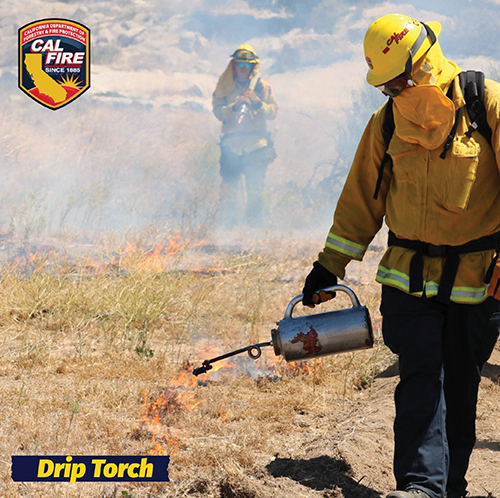

A Cal Fire firefighter uses a drip torch to ignite a controlled burn, one of the ways Cal Fire manages fuel loads to lessen the impact of wildfires.
When temperatures are on the rise the potential for a wildfire rises as well, and Cal Fire and the County Air Pollution Control District have issued a warning to be extra cautious not to spark a blaze.
“Forecasted warm temperatures are expected to push conditions above seasonal averages through June,” Cal Fire said in a March 12 news release, “and with below normal rainfall anticipated through April, grass and brush across the county are drying out earlier than usual.”
In response to the warm weather and lack of spring showers, Cal Fire declared a temporary burn suspension for all of SLO County from March 13-15.
But just because that temporary ban has now elapsed, the danger hasn’t eased.
“Early season rains produced robust grass growth across the county,” Battalion Chief Luke Bourgault said. “Those grasses will begin curing quickly in May and June, and once they do, we could see fast moving fires in the right conditions.”
This winter started out with some strong rainfalls last November and into December, which is early for this area. Normally, the end of the year is pretty dry and rains start to come in January with the heaviest normally falling in March and into April.
Big storms can sometimes happen even later than April.
For example, on May 20, 2017, a rainstorm caused the Mud Creek Landslide on Hwy 1 north of here — the biggest landslide in California history.
Statewide, Cal Fire said, fire potential is forecast to remain near normal through May, but [fire] activity is expected to increase in June as fine fuels continue to dry.
“These conditions also bring an increased risk of heat related injuries,” Chief Bourgault said. “While live vegetation currently holds enough moisture to reduce the likelihood of catastrophic wildfires in most areas right now, we still need the community’s help. Use equipment safely, avoid parking in dry grass, and take steps to protect your home and your neighbors.”
APCD will monitor the weather and issue periodic updates, which could include additional burn bans.
Everyone can pitch in to the lower the risks by doing some basic prevention, like clearing away dried grasses around your home to create defensible space, and being extra careful when using equipment like mowers or acetylene torches in or near dry grass.
For more information on wildfire preparedness, see: www.ReadyForWildfire.org.