

In California, the start of a New Year means a bunch of new laws hitting the code books and the California Highway Patrol issued a list of the ones they enforce that drivers and residents might not be aware of. Among the new laws for 2026 are:
• Assembly Bill 486, which makes it a misdemeanor to possess a “key programming device, a key duplicating device, or a signal extender with the intent to commit burglary,” the CHP said. The offense can result in up to 6-months in County Jail, a fine of up to $1,000, or both.
AB 486 “expands existing law by adding those three tools to the list of tools illegal to possess with the intent to commit burglary.”
• AB 544 “mandates that electric bicycles must have a red reflector or a solid or flashing red light with a built-in reflector on the rear during all hours of operation, not just during darkness as the law previously required.”
The new law “also allows the CHP-developed online electric bicycle safety and training program to fulfill the safety course requirement for minors who receive a helmet violation involving electric bicycles.”
• Senate Bill 586 redefines the terms “off-highway electric motorcycle” or “eMoto” as “a vehicle that is designed primarily for off-highway use; is powered by an electric motor that does not require a motor number; has handlebars for steering, a manufacturer-provided straddle seat, and two wheels; and is not equipped with manufacturer-provided pedals, according to the CHP.
The law also classifies an off-highway electric motorcycle as an off-highway “motor vehicle” (OHV), subject to the same rules and regulations. This includes a requirement that a person operating an OHV wear a safety helmet and that every OHV, not registered under the Vehicle Code, display an identification plate or device issued by the Department of Motor Vehicles.”
• AB 382 deals with speed limits in school zones. “Assembly Bill 382 allows local authorities to lower the school zone speed limit from 25 to 20 miles per hour by ordinance or Resolution through Jan. 1, 2031. After this date, the speed limit will automatically decrease from 25 to 20 mph in school zones when proper signage is posted.”
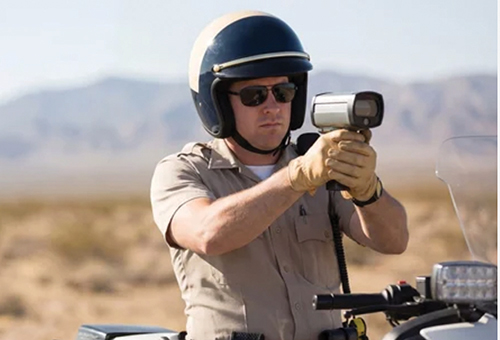
• AB 289 deals with safety in construction zones and robo-cops. It “authorizes the Department of Transportation [Caltrans] to establish a work zone speed safety system pilot program. The program will utilize a fixed or mobile radar or laser systems to detect speeding violations and capture a clear photograph of a vehicle’s license plate.
“Citations will be issued to the vehicle’s registered owner with specified requirements and procedures for program implementation, citation issuance, review, and appeal.”
• AB 390 also deals with speed limits in work zones. “Assembly Bill 390 expands the ‘slow down and move over’ law to include any highway maintenance vehicle or stationary vehicle using flashing hazard lights or warning devices such as cones and road flares.”
When approaching such a vehicle, drivers “must move into a lane that is not next to the stopped vehicle or slow down to a safe speed if changing lanes is not possible.”
• AB 1014 “authorizes the Department of Transportation to reduce a speed limit by 5 mph on a highway, and mandates warning citations during the initial 30 days after a speed limit is lowered.”
• AB 875 deals with apparently abandoned or broke-down vehicles. The law “authorizes a peace officer to impound a vehicle for at least 48 hours if the vehicle has fewer than four wheels but does not meet the definition of an electric bicycle; is powered by an electric motor capable of exclusively propelling the vehicle over 20 mph on a highway and the operator is not licensed to operate the vehicle; or is a Class 3 electric bicycle being operated by a person under-16.
“A safety course may be required as a condition of release if the impoundment involves a child under-16 years old operating a Class 3 electric bike” (as described in Section 312.5 of the California Vehicle Code).
• SB 1271 “focuses on improving the safety standards for electric bicycles, powered mobility devices, and related lithium-ion batteries.
“It requires these devices and their components, such as batteries and charging systems, to be tested by accredited laboratories to meet specific safety standards. The bill mandates labeling these products to show compliance with safety regulations, ensuring consumers are informed.”
It also prohibits distributing, selling, or leasing e-bikes and related equipment unless they meet these standards, “aiming to reduce risks like fire hazards and electrical malfunctions.”
Also, beginning Jan. 1, 2028, “the bill would prohibit a person from renting or offering for rental an electric bicycle, powered mobility device, charging system, or storage battery unless it has been tested to the specified safety standard.”
• AB 1777 creates new authority for a law enforcement officer “to issue a ‘notice of autonomous vehicle (AV) noncompliance’ to an AV manufacturer for an alleged traffic violation committed by one of their vehicles.
“Beginning July 1, 2026, AB 1777 establishes additional requirements for how AVs that operate without a human operator in the vehicle interact with first responders, including a requirement for manufacturers to provide a 2-way device in the vehicles to communicate with first responders.”
The provisions of AB 1777 would go into effect once the Department of Motor Vehicles adopts necessary regulations, the CHP said.