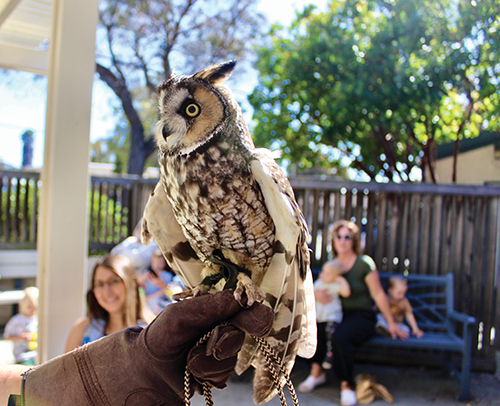

Leo, AKA Oberon, is a long-eared owl, that 15 years ago fell from his nest and fractured both wings. He is unable to fly well enough to live in the wild.
Photos by Theresa-Marie Wilson
The Morro Bay Library had some unusual patrons last week — two that fly and one that slithers.
Pacific Wildlife Care (PWC) presented an educational event, featuring live animal ambassadors, where they covered local wildlife rescue, rehabilitation efforts, and tips for living in harmony with nature to a crowd of about 50 people including wiggling kids and a smattering of adults.
Animal ambassadors in attendance were Pip, an American Kestral; William Snakespeare, a gopher snake; and Oberon, a long-eared Owl.
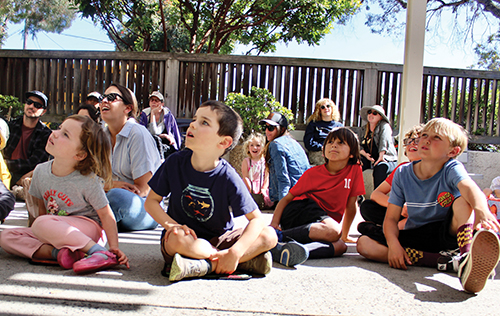
ambassadors at the Morro Bay Library.
“Our main goal with Pacific wildlife care is to rescue, rehabilitate and release wild animals in our area,” PCW educator, Tera Galanti told Estero Bay News. “An important aspect of what we do is to educate the public about the wildlife in our area. And we really depend on them to be kind of collaborators with us in our rescue efforts, because they are the ones that find the animals, they’re out and about, and they find baby animals and injured birds. We rely on them bringing animals to us. We also want to teach them to respect wildlife in their natural habitat and educate them about how to live together.”
Lucas, a 5-year-old from San Lusi Obispo, was among the attendees. He doesn’t have a favorite wild animal.
“I like them all,” he said adding that his mom, Kaylin, wanted to see a possum. After the presentation Lucas had a new favorite.
“I liked the snake. I wasn’t scared.”
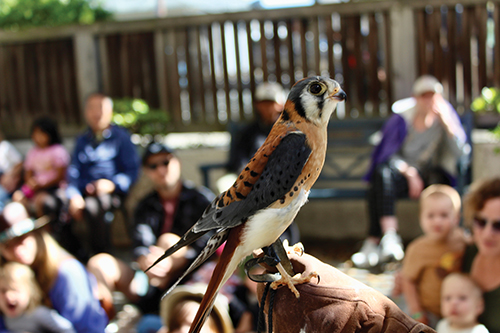
Maverick, 5 from Morro Bay, said his favorite wild animal is a bear, but he was excited to see birds.
“I want to see a seagull,” he said, “because they fly.”
The non-profit Pacific Wildlife Care was founded in 1984 by a small group of volunteers interested in the care and conservation of wildlife in San Luis Obispo County. They are the only licensed rehabilitation center that cares for injured birds, mammals, and reptiles throughout the county.
Over the last four decades, they have grown from a small group of dedicated home rehabilitators into a successful non-profit organization with a well-equipped rehabilitation center, a full-time wildlife veterinarian, a small paid staff, and nearly 200 volunteers.
Educational presentations are always a hit with the audience, but the kids might be the most exuberant, and that is a good thing.
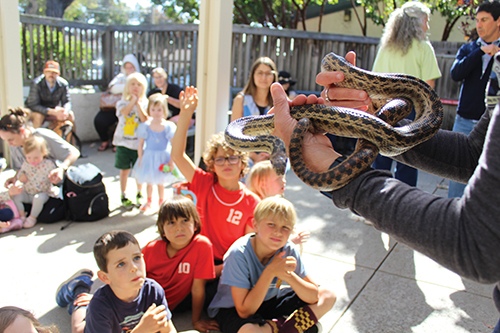
“This is one of the opportunities for us to reach the young children,” Jeri Roberts, PCW educator said. “We find that if they, this is true of adults too, see an animal, they appreciate an animal. It gives them that foundation to look around and listen and know that these animals are all around them and how special they are.”
Most of the animals PCW treats are impacted by human activity: tree trimming that disrupts nests, attacks by domestic pets, vehicle collisions that leave young animals orphaned, well-meaning but improper care, and more. In many cases, these animals are suffering because of human actions, not natural causes, the PCW website says.
New Facility
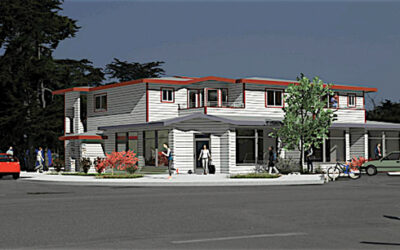
Construction is underway on the Kim and Derrel Ridenour Wildlife Rehabilitation Center at 385 Buckley Road in San Luis Obispo with plans for an end of 2026 completion date. They currently opperate in Morro Bay.
“So far, we’ve seen videos,” Roberts said. “We have not been able to do a walk through as yet, but it’s really moving along. We’re very excited.”
The new 10-acre site will include a main building with treatment areas and staff/volunteer spaces, specialized animal enclosures, pools, and flight aviaries and other necessary site improvements and solar power infrastructure.
Key highlights include a centralized location in San Luis Obispo County allowing for quicker response times and increased accessibility, a floor plan that minimizes occurrence of human interaction and imprinting on wildlife for best chances of successful release after care, the ability to adequately separate prey and predator species to minimize stress for best chances of rehabilitation, and an increased capacity and updated facilities improve operational efficiency and create safer working conditions for staff and volunteers.
Wildlife Baby Season
This year, baby season started early. PCW’s website says that they are already caring for twice as many animals as they were at this time last year, and busy months are still ahead.
There are more than 2,000 animals admitted during baby season, which means a $200,000 increase in seasonal expenses on top of regular expenses, and 100 plus hours more of volunteer support.
“During the slower winter season, we average about 60 animals in care on any given day. During baby season, that number climbs to nearly 400 animals, with admissions often exceeding 30 new patients per day.
“We’ve been admitting an increasing number of baby mammals like squirrels, opossums, skunks, bunnies, and more.”
PCW advises that folks check your boats, trailers, and campers before moving them. It’s nesting season which means bird families are trying to find the best spot to raise their babies.
Other helpful tips are to hold off on tree trimming, keep cats indoors and don’t use glue traps or rodenticides, which also harm songbirds, owls, reptiles, and other non-target wildlife.
“Don’t trap and relocate wildlife, the website cautions. You could unknowingly separate a mother from her babies. Instead, remove food sources (like pet food left outside) and close-off access to buildings after wildlife has vacated to discourage unwanted visitors.”
The non-profit is looking for 2’ x 2’ fleece pet blankets (approx. size) and standard 12” x 15” heating pads with no auto shut off and several other items. Buying is easy, go to amazon.com/hz/wishlist/ls/Y158U67U1M83.
Readers who are interested in shopping elsewhere can check out the everyday items they need on Amazon, and find them wherever you like to shop. Financial donations can be made at pacificwildlifecare.org/give.
Anyone who finds a wild animal in need, is asked to call (805)543-9453(WILD).