
Cal Fire and the Los Osos CSD will continue their contract for fire services for another three years.
The question of whether Los Osos and Morro Bay would merge fire departments has been settled.
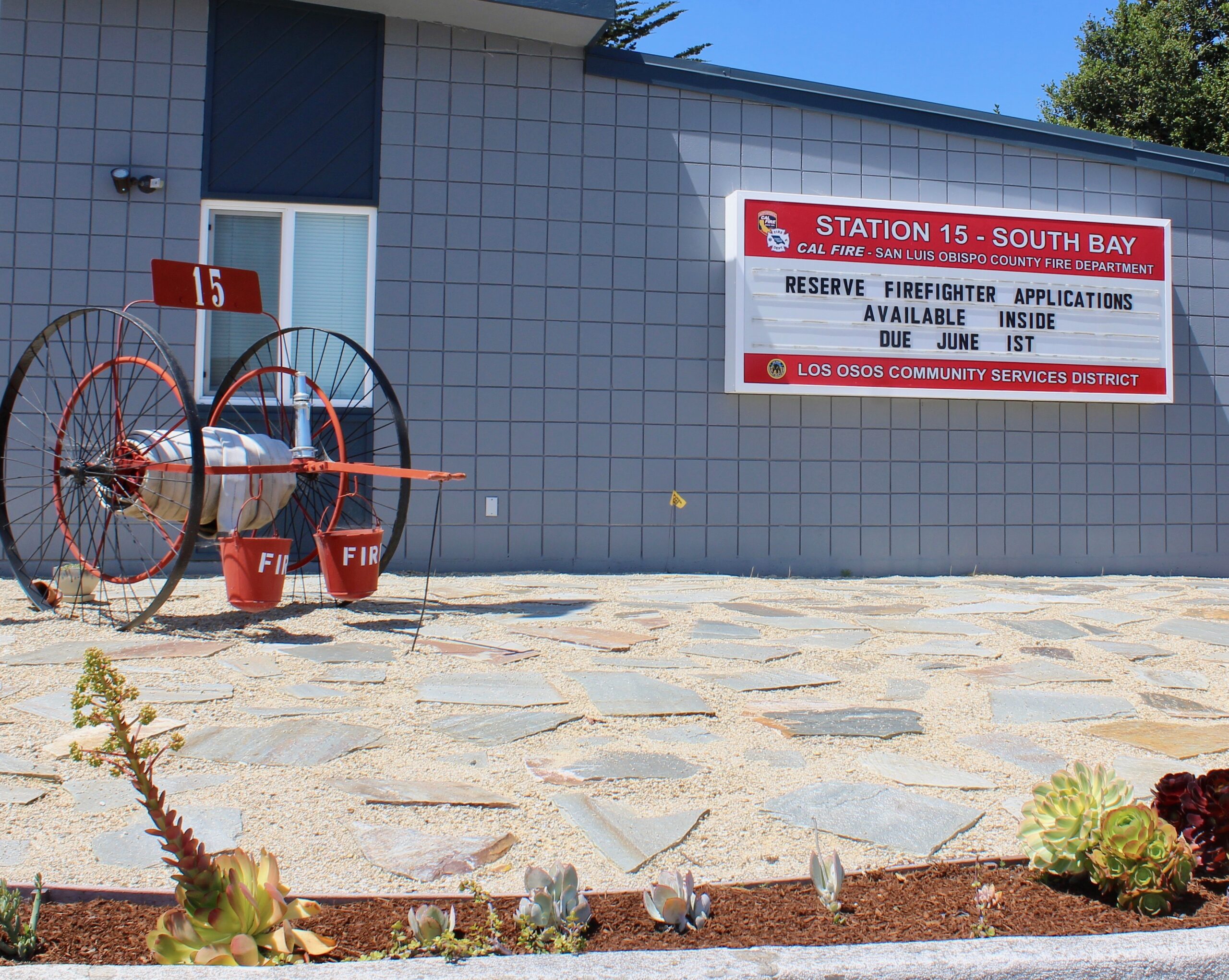
The Los Osos Community Services District Board voted to stick with Cal Fire for its fire services, approving a new deal that will keep staffing levels where they are now.
“Under the terms of the agreement,” LOCSD said in a news release, “the District will continue the services as they are now provided. Services will be delivered utilizing a 3-1 staffing model, consisting of three full time Cal Fire personnel and one reserve firefighter.
“This model is intended to maintain effective emergency response capabilities and continue providing a high level of service to the community.”
The decision came at the Board’s April 2 meeting when they were given the options of staying with Cal Fire, under two different scenarios or to accept a proposal from Morro Bay that increased staffing levels to four full-time firefighters, all paramedics all the time, at an increased cost to the community.
The LOCSD has an assessment district in place that taxes property owners to fund the fire service, a system that predates the CSD and used to be under the moniker of South Bay Fire.
Over 20-years ago, the recently formed CSD decided to enter into a contract with Cal Fire/County Fire and have the much larger department take over management of the single station fire department.
That arrangement worked well for many years but in recent times, cost increases have led to the CSD facing a tight budget.
And with the contract coming up for renewal soon, last May the Board wanted to explore options, which it turns out it also couldn’t afford without increasing taxes.
“The contract,” the release said, “will take effect following the conclusion of the current agreement and will remain in place for a period of three years.”
Current levels
The current LOCSD contract — and in turn what will be going forward — calls for three full time firefighters on duty at all the times, supplemented by one reserve firefighter. Four firefighters on duty is the preferred minimum standard for staffing in California’s fire service. Having one of these people be a reservist is common though not ideal.
Two of the four must be certified paramedics, a necessity for emergency medical calls. COVID threw a monkey wrench into this system.
“This model was working well until around 2020 when the COVID pandemic hit,” the LOCSD report said. “Since then, there have been fewer qualified applicants and substantial turnover once the reserve firefighter was trained and certified and able to work for another agency as a regular employee.”
That’s been a nagging problem for years with the reserve system, which replaced the old “volunteer” fire department model.
Under modern standards, reservists must do the same training and earn certifications as full time firefighters, meaning that once certified, they have the skills to seek a full time job, often with a different department, and leave.
“The post pandemic world has meant unreliable staffing for the Los Osos Department, impacts to response times, and potential safety concerns.”
But just because the staffing in Los Osos doesn’t meet the ideal goals, doesn’t mean the community isn’t well served. LOCSD has an excellent record of service, that is bolstered by a mutual aid system for big incidents.
But costs, especially employee costs are tied in with the greater costs of the statewide Cal Fire, so when the union negotiates a new contract in Sacramento, it trickles down to affect the local contract costs as well.
Cal Fire Costs
Cal Fire’s 3-year proposal pegs the first year overall costs at more than $3.84 million, including staffing benefits, dispatch costs, uniforms and “minor vehicle operational cost and a 10.77% administrative fee.”
Personnel costs alone are projected at more than $3.75 million of that total. Some $94,000 would be for dispatch costs.
Dispoatch is handled through the County Fire’s new dispatch center in Templeton, which also houses law enforcement dispatching for the County Sheriff and several cities.
The proposal includes a 3.5% increase annually for inflation for each of the 3 years.
Cal Fire also submitted an interim 3-year proposal that LOCSD General Manager, Ron Munds said was basically the same thing they have now.
Both proposals called for three firefighters, two of which would be paramedics, and a reservist manning the station. But the costs for a reserve program aren’t included.
“The estimated budgeted cost for fiscal year 2026-27 for the reserve program is $315,225,” Munds said. “The actual expenditures vary from year-to-year based on the hours worked by the reserves and recruitment costs. The downside is the continued reliance on the reserve program to provide the fourth employee.”
The costs for that interim proposal are $3.11M overall and $3.08M personnel including dispatch.
Cal Fire also has an agreement to respond to calls for service in Montaña de Oro State Park and if offered extra benefits to the District to keep that arrangement going.
Morro Bay’s Proposal
What did Morro Bay offer? That proposal was for four full time firefighter staffing, a standard the City has had in place for a couple of years now.
Among the assumptions are: salaries at highest levels; all personnel are paramedics; retirement calculated at Tier 1 (the highest) level under PERS; and PERS unfunded un-accrued liability cost of $408,000, according to Munds’ report.
Overall costs were: $3.66M personnel; $150,000 dispatch; and 5% administrative costs (percentage of personnel costs only, about $158,000).
Morro Bay also proposed a 6-month transition period, in order to hire a dozen new firefighters to staff the station, train and equip them. Munds estimated these “start up” costs at $202,000.
The City’s proposal was also for 15 years, instead of three.
Fire Fee Increasing
Though the levels of fire service will stay the same, that doesn’t mean the costs to Los Osos’ citizens is staying the same.
Also on that April 2 meeting agenda was a proposal for the regular increase in the fire tax.
The Board was asked to approve increasing the special fire tax 3.02% to account for inflation. That rate hike will raise the fire tax 66¢ per unit of benefit to $22.46 per unit.
According to a report from the LOCSD’s engineering firm The Wallace Group, “A residential single family dwelling is equivalent to five units of benefit; multiple dwellings in a parcel except apartments and mobile homes are configured to be four units of benefit per dwelling unit; while apartments and mobile homes are configured to be three units of benefit per dwelling unit. Therefore the annual increase from this CPI increase will range from $1.98 to $3.30 per household.”
But according to Munds, the fire tax is not keeping up with the rising costs. “A future Special Fire Tax increase will likely be necessary to support higher service levels.”