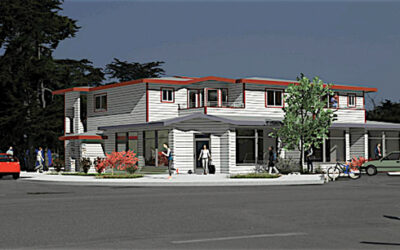


The State of California has recognized San Luis Obispo County for efforts to ease the “housing crunch,” and changing its General Plan to be more pro-housing.
“The California Department of Housing and Community Development (HCD),” reads a news release form the County, “has announced the County has earned the prestigious ‘Pro-housing Designation.’ It is a recognition reserved for cities and counties that go above and beyond in enacting bold, locally driven policies that accelerate housing production, lower costs, and expand opportunities.”
In a State that has its share of bureaucracy, SLO County is being honored for the opposite.
“Pro-housing jurisdictions,” the County said, “are recognized for cutting red tape and permitting timelines, unlocking land and funding, and zoning for more housing types. They are doing so while protecting affordability, equity, and sustainability.”
Part of the test for this is a County’s being accountable.
“In addition to adopting a robust slate of pro-housing policies, each designated jurisdiction must meet and maintain a high standard of accountability,” the County said. “That includes having a certified housing element [housing plan], staying current on annual progress reports and policy and program commitments, completing required re-zonings, maintaining good standing with State housing laws, and having an approved encampment response plan.”
SLO County “was recognized for lowering permit barriers for affordable housing,” the County said, “incentivizing higher density through land use changes, and creating a new local trust fund to support nonprofit housing development.”
The designation is a key to receiving funding help from the State.
“The Pro-housing Designation,” the County explained, “unlocks benefits for jurisdictions — including priority and bonus points in state housing, infrastructure, and planning programs like the Pro-housing Incentive Program, Caltrans Sustainable Transportation Planning Grants Program, Affordable Housing and Sustainable Communities, and more.”
In response, Supervisors made some changes to the General Plan’s Housing Element, “to support greater housing production. The Board updated land use regulations and incentives for builders, leveraging local dollars to bring additional State and Federal funds into the region.
“The changes are aimed at encouraging more affordable and higher density housing to help meet housing demands from local workers and residents.”
Supervisors had formed a subcommittee including private business interests.
“A sub-committee comprised of local builders, non-profit affordable housing developers, building industry stakeholders, Dist. 3 Supervisor Dawn Ortiz-Legg, and Dist. 4 Supervisor Jimmy Paulding worked with County planning staff to develop creative solutions to the County’s housing challenges.”
Board Chairwoman, Ortiz-Legg, said, “With a collaborative effort, we have successfully streamlined the process for creating more housing. By encouraging multifamily development in commercial zones, this initiative will provide vital relief for families, young professionals, and employers throughout SLO County.”
Among the changes to the Housing Element that have been enacted are:
• Multi-Family Dwelling Regulation Updates. “Amendments will be made that are designed to streamline and increase flexibility in policies governing multi-family dwelling development,” t5he County said. “These changes are designed to support more multi-family housing construction, which can help address housing shortages and affordability challenges in both inland and coastal communities.”
The County continued, “Updated policies and reduced procedural barriers should help developers, housing nonprofits, and other stakeholders move projects forward more efficiently.”
• Regional Housing Incentives & Regional Housing Fund. The County plans to establish a “Regional Housing Incentive Program” and create a “Regional Housing Fund” that leverages local dollars to bring in additional State and Federal funding.
“These measures are intended to fill the current funding gap for approximately 280, previously-approved affordable housing units that are ready for construction,” the County said.
“The Regional Housing Fund will create a dedicated financial mechanism to support affordable housing projects, and the incentive program will encourage development in regions with infrastructure capacity.”
It should be noted that SLO County voters in 1990 passed a growth management ordinance that limits the maximum number of dwelling units that can be built in the unincorporated county rural areas and towns in a calendar year to no more than 2.3%.
“The number of new dwelling units to be allowed,” reads Title 26, Chapter 26.01 of the County Codes, “shall be based on the number of existing county unincorporated housing units.”
In essence, the law allows the County to set the number of units that can be built in a given year by limiting the “allocation” of permits and the limit is set annually by County Supervisors. It’s intended to tie growth in with available resources, mainly water.
There are of course exemptions to this law. For example, secondary or accessory dwelling units (granny units) are exempt, so too are replacement dwellings, farm labor housing, already vested subdivisions, and so-called affordable housing are listed specifically as being exempt from the growth limit.
“Proposed new dwelling units,” the law reads, “which will be affordable housing for persons and families of low or moderate income [as defined by California Health and Safety Code Section 50093], with long-term affordability guaranteed as provided by all applicable sections of the Land Use Ordinance, Title 22 and the Coastal Zone Land Use Ordinance, Title 23 of the county code.”
So while someone wanting to build a new single family home might come up against this growth limit, the ready-to-build affordable units cited by Supervisors should not hit this brick wall.
But some areas, Cambria and Los Osos in particular, have even more restrictions on growth. Both communities have a “waiting list” for allocations to build.
In Los Osos the rules state: “The historic “building moratorium” on undeveloped parcels was lifted by the County Board of Supervisors. The residential growth rate in Los Osos may never exceed 1%, includes accessory dwelling units and deed-restricted affordable housing units, and must be based on review of the best available groundwater monitoring data.
However, Supervisors “established a 0.4% growth rate for calendar year 2025 allowing 25 new dwelling units in the community.”
That same rate of 0.4% growth was carried into 2026. (See: www.slocounty.ca.gov/departments/planning-building/grid-items/communities-villages/los-osos for further restrictions.)
In Cambria, the maximum annual allocation rate is set at zero.
“This means,” the County said, “that no new allocation requests can be approved other than those accompanied by an intent-to-serve letter from the Cambria Community Services District for replacements, transfers, and grand-fathered water meters.”